
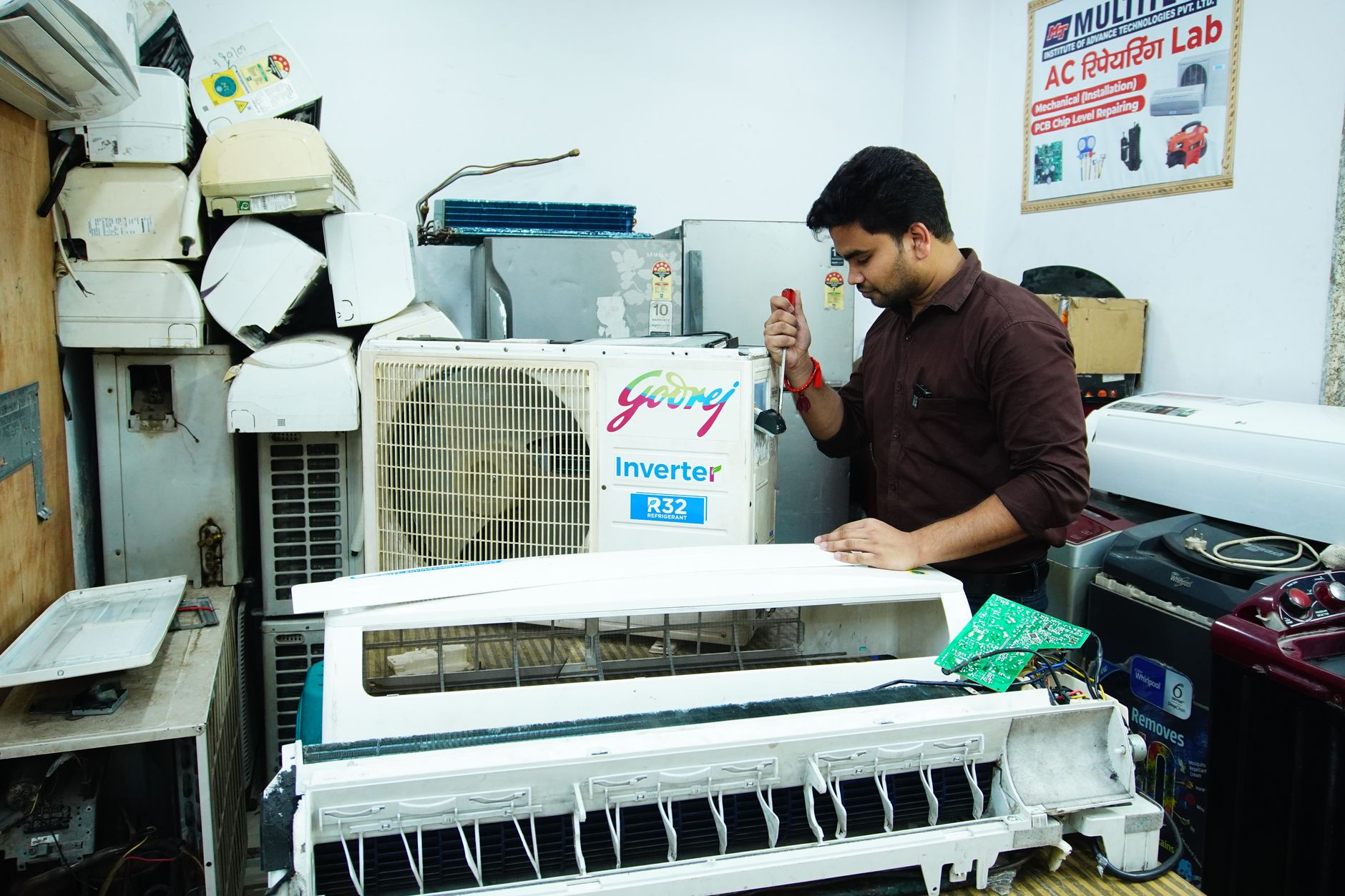
Adding air conditioner repairs to an existing repair shop can boost revenue—but only if you account for upfront costs, technician training, and market demand. This guide breaks down the tools, parts investment, and break-even timelines you need to know before expanding into HVAC service, including when it’s not worth the risk. For shop owners weighing this decision, the key is balancing profitability with operational reality, from refrigerant handling certifications to managing parts inventory against job margins.
Adding Air Conditioner Repairs to an Existing Repair Shop
Expanding into air conditioner (AC) repairs is a strategic move for repair shops looking to diversify service lines, especially as summer 2026 demand remains strong. However, profitability depends on more than just adding a new category—it requires upfront investments in tools, certifications, parts, and workflow adjustments. This guide covers what you need to launch AC repairs, how long it takes to break even, and when the risks outweigh the rewards.
Key Takeaways
- Upfront costs for tools, training, and certifications typically range from $5,000 to $20,000, depending on whether you start with basic repairs or full HVAC service.
- Break-even timelines vary widely: shops with existing technician teams may see profitability in 3 to 6 months, while those requiring new hires could take 9 to 12 months.
- Parts inventory is critical—common AC repairs (e.g., capacitors, compressors, coils) require $1,500 to $5,000 in initial stock, with markup potential of 30% to 50%.
- Certifications (EPA 608 for refrigerant handling) are non-negotiable in 2026 and add $200 to $1,000 in training costs per technician.
- Not all shops should add AC repairs—low-demand areas, high competition, or thin margins on basic jobs (e.g., fan motor replacements) can make this expansion unprofitable.
What You Need to Start an Air Conditioner Repair Business
Before adding AC repairs, assess whether your shop’s existing infrastructure can support the workload. Unlike electronics or appliance repairs, HVAC work requires specialized tools, certifications, and parts management.
1. Tools and Equipment
Basic AC repairs (e.g., cleaning coils, replacing capacitors) require:
- Diagnostic tools: Manifold gauge sets ($150–$400), vacuum pumps ($200–$600), and refrigerant detectors ($100–$300).
- Hand tools: Torque wrenches (for compressor installations), crimping tools for electrical connections, and UV-resistant adhesives for refrigerant line repairs.
- Safety gear: EPA-approved refrigerant recovery machines ($800–$2,500) and proper ventilation equipment.
For full HVAC service (ductwork, system replacements), budget $10,000–$30,000 for commercial-grade tools like copper brazing torches, multi-meters, and core pullers.
Pro tip: Start with a modular toolkit—prioritize diagnostic equipment first, then expand as you take on more complex jobs.
2. Certifications and Compliance
In 2026, EPA Section 608 certification is mandatory for handling refrigerants. Costs vary by state:
- Online certification: $200–$400 per technician (includes exam fees).
- In-person training: $600–$1,000 (required for some states like California and Texas).
- Business license: Check local requirements—some municipalities require a HVAC contractor’s license for commercial repairs.
Warning: Fines for uncertified refrigerant handling can exceed $50,000 per violation. Verify your state’s EPA-approved providers before enrolling.
3. Parts Inventory and Sourcing
AC repairs rely on high-margin parts with long lead times. Stock these essentials:
| Part Type | Estimated Cost (2026) | Markup Potential | Shelf Life |
|---|---|---|---|
| Capacitors | $10–$50 | 40–60% | 6–12 months |
| Compressors | $150–$800 | 30–50% | 12+ months |
| Coils (evaporator/condenser) | $200–$1,200 | 50–70% | 24+ months |
| Contactors | $20–$100 | 35–55% | 12–18 months |
| Refrigerant (R-410A/R-32) | $50–$200 per canister | 20–40% | 12 months |
Key insight: Partner with local distributors (e.g., SupplyHouse, HVAC Supply Houses) for bulk discounts. Use inventory management software to track parts against each job—tracking parts against each job ensures you don’t overstock slow-moving items like 3-ton compressor kits.
4. Technician Training and Labor Costs
- Existing techs: Allocate 2–4 weeks for EPA 608 training + hands-on AC repair courses ($500–$1,500 per technician).
- New hires: Pay $20–$35/hour for certified HVAC techs (varies by region). Entry-level techs may take 3–6 months to reach full productivity.
- Upselling potential: Trained techs can increase average repair tickets by 25–40% by identifying upsell opportunities (e.g., duct cleaning, smart thermostat installations).
Red flag: If your shop’s average repair ticket is under $150, AC repairs may not justify the labor investment.
How Long Does It Take to Break Even?
Break-even depends on volume, pricing strategy, and upfront costs. Here’s a realistic timeline:
| Scenario | Upfront Cost | Monthly Revenue Goal | Break-Even Time |
|---|---|---|---|
| Basic repairs (cleaning, capacitors, contacts) | $5,000–$10,000 | $8,000–$12,000 | 3–5 months |
| Intermediate repairs (compressor replacements, coil cleaning) | $15,000–$25,000 | $15,000–$20,000 | 6–9 months |
| Full HVAC service (system replacements, ductwork) | $30,000+ | $25,000+ | 9–12+ months |
Data source: 2026 HVAC industry reports show that 60% of repair shops achieve profitability within 6 months of launching AC services, provided they secure 10–15 AC repair jobs per month.
When It’s Not Worth It
- Low-demand areas: Rural regions with fewer than 5 AC service calls per week may not justify the overhead.
- High competition: Cities with multiple HVAC specialists (e.g., Miami, Phoenix) can erode margins.
- Thin margins on basic jobs: If your labor + parts cost exceeds 70% of the repair ticket, profitability suffers.
- Lack of upsell opportunities: Shops that only do $100–$200 capacitor replacements miss out on $500–$2,000 system tune-up upsells.
Example: A shop in Dallas, TX, added AC repairs in 2025 and broke even in 4 months by targeting commercial HVAC maintenance contracts (recurring revenue). A shop in Portland, ME, took 10 months due to lower summer demand.
Pricing Your Air Conditioner Repairs for Profit
Pricing too low attracts competitors; pricing too high drives customers to bigger HVAC firms. Use this 2026 pricing framework:
| Service Type | Labor Cost (Hourly) | Parts Markup | Total Repair Ticket Range |
|---|---|---|---|
| Coil cleaning | $120–$200 | 40% | $150–$300 |
| Capacitor replacement | $150–$250 | 50% | $200–$400 |
| Compressor replacement | $500–$1,200 | 30% | $800–$1,800 |
| Refrigerant recharge | $100–$250 | 25% | $150–$350 |
| Full system tune-up | $250–$500 | 40% | $400–$800 |
Pro tip: Bundle services—e.g., "Summer AC Checkup" ($399) includes coil cleaning + refrigerant check + minor electrical fixes. This increases average ticket value by 30%.
Common Pricing Mistakes
- Underestimating labor time: A "quick" capacitor swap can turn into a 2-hour job if wiring is corroded.
- Ignoring disposal fees: Old compressors or refrigerant require proper disposal—factor in $20–$100 per job for compliance.
- Not adjusting for seasonality: June–August is peak demand; September–May may require promotions to maintain volume.
Reference: U.S. Bureau of Labor Statistics HVAC pricing trends (2026)
Streamlining AC Repairs with the Right Software
Managing AC repairs introduces new workflows—scheduling refrigerant handling, tracking EPA-compliant disposal, and integrating parts inventory with service tickets. The Quick Repairs POS system helps shops:
- Automate compliance: Flag jobs requiring EPA 608 certification and log refrigerant quantities used.
- Track parts usage: Link compressor or coil replacements directly to inventory, reducing stockouts.
- Upsell strategically: Suggest thermostat upgrades or duct cleaning during service calls with one-click add-ons.
- Manage warranties: AC repairs often involve manufacturer warranties—our system flags coverage details at checkout.
Example: A repair shop in Atlanta using The Quick Repairs system reduced no-shows by 20% by sending automated AC maintenance reminders to customers.
Final Considerations: Should You Expand?
Adding air conditioner repairs can increase revenue by 20–40% for the right shop—but success depends on local demand, upfront investment, and operational efficiency. If your shop has:
Existing technician bandwidth to train for AC work,
Access to parts suppliers with competitive pricing,
A market with seasonal or recurring AC demand (e.g., Florida, Arizona, commercial clients),
…then expanding is a high-margin opportunity.
If you’re unsure about demand or upfront costs, start with a pilot program: Offer AC coil cleaning or capacitor replacements for 3 months, track profitability, and scale up based on results.
For shops ready to optimize their AC repair workflows, The Quick Repairs POS system simplifies scheduling, parts tracking, and compliance—so you can focus on growing revenue. Talk to an expert to see how our software can streamline your expansion.
Reference sources: