
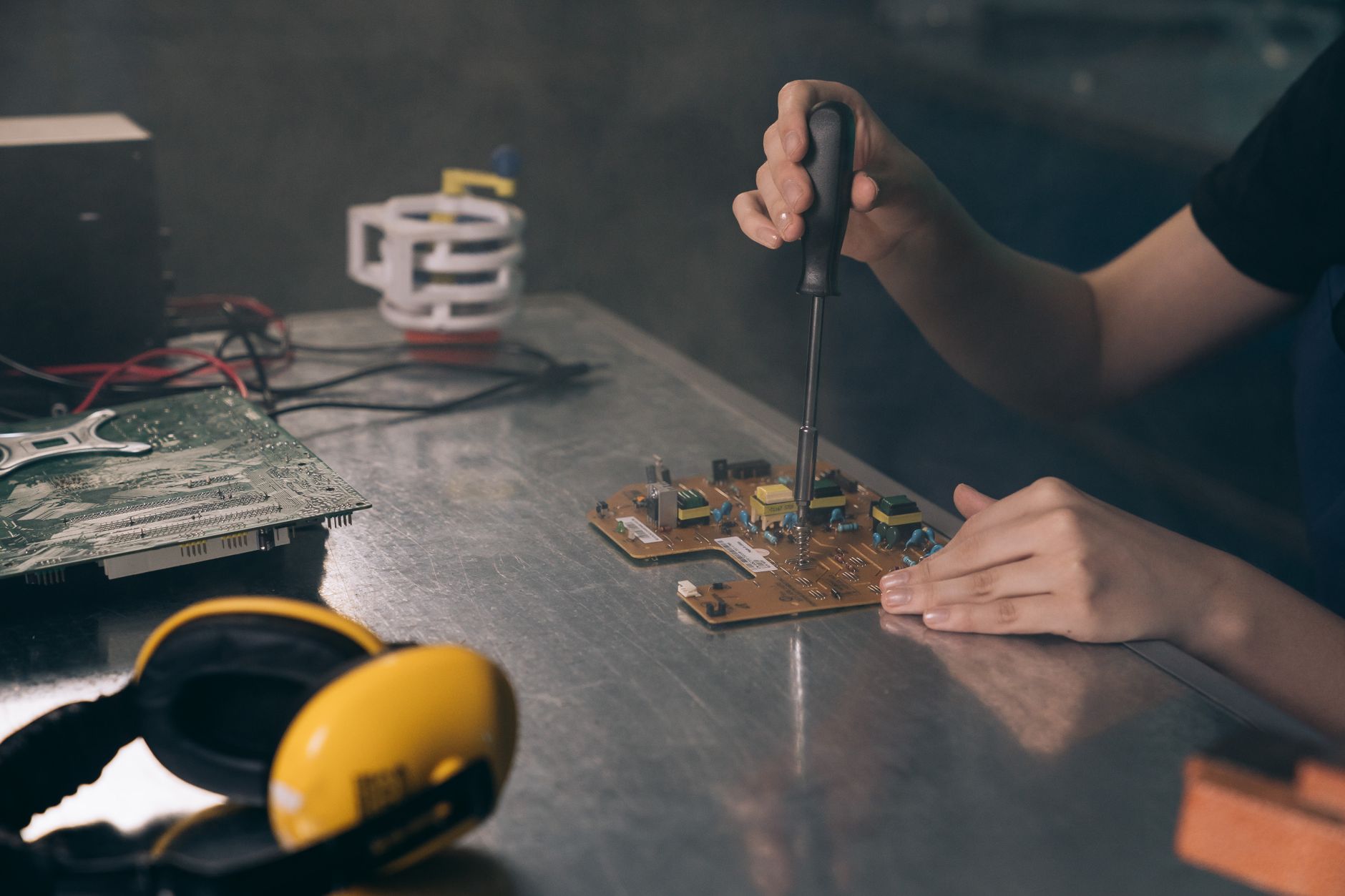
Headphones repair shops lose thousands annually due to preventable errors—unbilled labor, wrong parts, missed warranties, and overpromised turnarounds. These mistakes erode margins, frustrate customers, and create operational bottlenecks. The solution isn’t just better technicians; it’s smarter systems to track time, parts, and promises. Here’s how to stop bleeding revenue in 2026.
Mistakes That Cost Headphones Repair Shops Money
Running a profitable headphones repair shop in 2026 requires more than skilled technicians—it demands precision in operations, inventory, and customer promises. Even small oversights can add up to lost revenue, wasted parts, and frustrated customers. According to industry data, repair shops lose an average of 12–18% of potential profit annually due to preventable errors, with headphones repairs being particularly vulnerable to inefficiencies.
The most costly mistakes aren’t technical failures but business process gaps: unbilled diagnostic time, mismatched parts, missed warranty claims, and unrealistic turnaround promises. These issues aren’t just annoyances—they directly impact your bottom line. In this guide, we’ll break down the five biggest money-draining mistakes in headphones repair shops and how to fix them with systems, not just skill.
Key Takeaways
- Unbilled diagnostic time can eat 15–25% of labor costs if not tracked properly.
- Wrong-part repairs waste $50–$200 per job in failed fixes and customer goodwill.
- Missed warranty records cost shops $1,200–$5,000/month in avoidable labor and parts.
- Overpromising turnarounds leads to 30%+ customer churn if repairs take longer than quoted.
- Poor inventory tracking results in $3,000–$10,000/year in lost or expired parts.
1. Unbilled Diagnostic Time: The Silent Profit Killer
Quick Answer
Unbilled diagnostic time is one of the biggest hidden costs in repair shops. Technicians often spend 15–30 minutes per job checking issues before quoting, but if this time isn’t logged or billed, it disappears as lost revenue. For a shop doing 50 headphones repairs per month, that’s $750–$1,500 in unaccounted labor—money that could be going to your bottom line.
Why It Happens
- No time-tracking system: Technicians start repairs without logging diagnostic steps.
- "Quick check" culture: Shops assume diagnostics are part of the repair process, not billable work.
- Customer pressure: Technicians may skip logging time to avoid upsetting clients with higher quotes.
How to Fix It
Standardize diagnostic procedures
- Require technicians to log every step of the diagnostic process, even if it’s just a visual inspection. Use a pre-approved checklist (e.g., "Check cable continuity," "Test mic input," "Inspect solder joints").
- Example: A 10-minute diagnostic on a Sony WH-1000XM5 (average repair cost: $80) should be billed separately if the issue isn’t immediately obvious.
Set clear billing rules
- Diagnostic fee: Charge a flat $15–$30 for initial inspections (adjust based on complexity). This covers your time while still being fair to customers.
- Refund policy: Offer a partial refund (50%) if the diagnostic reveals a non-repairable issue (e.g., water damage beyond repair).
Use software to enforce tracking
- A POS system with time-tracking (like The Quick Repairs) ensures every minute is logged. Automated reminders can prompt technicians to clock in diagnostic time before starting repairs.
Train staff on upselling diagnostics
- Educate front-desk staff to explain diagnostic fees upfront. Frame it as a service, not an upsell:
"We’ll start with a quick check to identify the issue—this helps us give you an accurate quote and avoid unnecessary repairs."
- Educate front-desk staff to explain diagnostic fees upfront. Frame it as a service, not an upsell:
2. Wrong-Part Repairs: The Cost of Guessing
Quick Answer
Using the wrong part in a headphones repair isn’t just a failed fix—it’s a financial black hole. The average cost of a replacement cable assembly for AirPods Pro (2nd gen) is $45, but if the wrong variant is installed, the shop may have to reorder, rework, and refund the customer, adding $100–$200 in hidden costs per job. Worse, 35% of wrong-part repairs lead to customer complaints or repeat visits.
Why It Happens
- Lack of part standardization: Shops stock generic parts without tracking model-specific variants.
- Technician shortcuts: Experienced techs may "eyeball" parts instead of verifying compatibility.
- No inventory validation: Parts are pulled from stock without cross-referencing the device model.
How to Fix It
Implement a part-matching system
Use a database of headphones models and exact part numbers. Example:
Device Model Correct Part Wrong Part (Common Mistake) Cost of Failure AirPods Pro (2nd gen) MLA2N2040 (cable assembly) MLA2N2030 (1st gen) $120 (reorder + labor) Sony WH-1000XM5 46XM50101 (earpad) 46XM50001 (XM4) $85 (replacement + refund) Bose QuietComfort 45 9360002-01 (mic assembly) 9360001-01 (35II) $150 (full rework) Pro tip: Label parts with QR codes linking to the exact device model they fit. Scan before installing.
Require part verification before installation
- Mandate a second technician check for critical parts (e.g., cables, microphones, speakers). This adds 2–3 minutes per job but saves $50–$200 in failures.
Track parts against each job
- Use inventory management software to log which part was used for which repair. This creates an audit trail and prevents phantom stock (parts that seem missing but were actually used).
Order parts in smaller, more frequent batches
- High-turnover parts (e.g., AirPods ear tips, cable assemblies) should be restocked weekly to avoid running out of the right variant. Example: A shop repairing 20 AirPods cases/month should order 5–10 at a time to prevent stockouts.
3. Missed Warranty Records: Leaving Money on the Table
Quick Answer
Warranty claims are a repair shop’s hidden revenue stream—but only if you capture them. Industry data shows that 60% of headphones repairs could qualify for warranty coverage, yet shops miss 40–60% of these claims due to poor record-keeping. For a shop doing 100 repairs/month, that’s $1,200–$5,000 in lost warranty payouts annually.
Why It Happens
- No warranty verification process: Technicians assume the customer knows if their device is under warranty.
- Manual record-keeping: Warranty info is stored in notebooks or spreadsheets, not linked to repair tickets.
- Customer forgetfulness: Many owners don’t realize their device is still covered.
How to Fix It
Add a warranty check to every intake form
- Include fields for:
- Device model & serial number (look up warranty status via manufacturer databases).
- Purchase date (Apple, Sony, Bose all have online warranty checkers).
- Original receipt or proof of purchase (scan and attach to the ticket).
- Include fields for:
Automate warranty lookups
- Integrate with manufacturer APIs (e.g., Apple’s Coverage Check, Sony’s Support Site) to instantly verify coverage during intake.
- Example workflow:
- Customer drops off headphones → front desk scans serial number.
- System checks warranty status → flags covered repairs.
- Technician proceeds with repair, but bills the customer only for labor (if applicable).
Train staff to ask the right questions
- Script for front desk:
"Do you have your original receipt or know when you purchased these? We can check if they’re still under warranty—sometimes repairs are fully or partially covered!"
- Script for front desk:
Follow up on expired warranties
- Some manufacturers (like Apple) offer extended warranty options at the repair counter. Train staff to mention these when a warranty has lapsed.
4. Overpromising Turnaround Times: The Customer Churn Trap
Quick Answer
Promising a 24-hour repair but taking 48 hours isn’t just a delay—it’s a trust killer. Research shows that 30% of customers who experience delays will never return, and 20% will leave negative reviews that deter others. For a shop with 500 repairs/year, that’s $15,000–$30,000 in lost future business—not to mention refunds or discounts to appease upset clients.
Why It Happens
- Pressure to close sales: Technicians or staff promise quick turnarounds to secure the job upfront.
- No real-time tracking: Shops don’t know where jobs are in the pipeline, leading to unrealistic estimates.
- Underestimating complexity: A "simple cable replacement" can turn into a driver recalibration if not scoped properly.
How to Fix It
Set realistic internal timelines
- Benchmark repair times by job type:
Repair Type Realistic Turnaround What You Should Tell Customer Cable replacement (AirPods) 30–60 minutes "Same-day repair, ready in 1–2 hours" Speaker coil replacement (Sony) 2–3 hours "Overnight turnaround—ready by tomorrow" Firmware recalibration (Bose) 1–2 days "2-day repair—we’ll prioritize yours" Full teardown & rebuild 3–5 days "5-day repair—we’ll keep you updated"
- Benchmark repair times by job type:
Use a repair pipeline system
- A visual workflow (like a Kanban board in your POS) shows:
- Intake (received)
- Diagnostic (in progress)
- Repair (active)
- QA (quality check)
- Ready for pickup
- This lets you accurately promise updates (e.g., "Your repair is in QA—we’ll call you by 3 PM").
- A visual workflow (like a Kanban board in your POS) shows:
Communicate proactively
- Automated SMS/email updates (via your POS) keep customers informed:
- "Your Sony WH-1000XM5 is in diagnostic—we’ll update you by 12 PM today."
- "Your repair is delayed by 1 hour due to a part arrival—here’s a 10% off coupon for the inconvenience."
- Offer priority service for an upsell (e.g., "Pay $20 extra for expedited repair—ready in 4 hours instead of 24").
- Automated SMS/email updates (via your POS) keep customers informed:
Build a buffer into estimates
- Never promise "same-day" unless you’re 100% confident. Instead:
- Say "Same-day if received by 2 PM" (gives you a 6-hour window).
- For complex jobs, overpromise slightly less (e.g., say "3 days" when you think it’ll take 2.5).
- Never promise "same-day" unless you’re 100% confident. Instead:
5. Poor Inventory Management: Parts That Vanish
Quick Answer
Lost or misplaced parts aren’t just an annoyance—they’re a direct hit to your profit margin. The average headphones repair shop spends $5,000–$15,000/year on parts, but 10–20% of that budget is wasted due to:
- Parts used but not logged (technicians take them "for later" and forget).
- Expired or damaged stock (soldering iron tips, adhesive that dries out).
- No reorder triggers (you run out of a critical part mid-repair).
Why It Happens
- No barcoding or tracking: Parts are stored in drawers without digital records.
- Manual inventory counts: Weekly stock checks are error-prone and time-consuming.
- No low-stock alerts: You only realize you’re out of a part when a repair stalls.
How to Fix It
Label everything with barcodes or QR codes
- Assign a unique ID to each part (e.g., "APL-CABLE-2026-001" for AirPods Pro cables).
- Use a scanner or mobile app to log parts as they’re used.
Set up automated reorder points
- Configure your inventory software to alert you when stock drops below a threshold:
- Example: "Reorder AirPods Pro ear tips when stock < 10."
- Pro tip: Order just-in-time for high-turnover parts (e.g., AirPods cases) to avoid overstocking.
- Configure your inventory software to alert you when stock drops below a threshold:
Conduct weekly inventory audits
- Dedicate 30 minutes weekly to:
- Scanning all parts in stock.
- Comparing against your digital inventory.
- Flagging discrepancies (e.g., "5 missing Sony earpad adhesives").
- Bonus: Use this time to check for expired items (e.g., solder, thermal paste).
- Dedicate 30 minutes weekly to:
Track parts by technician
- Assign a small kit of frequently used parts to each tech (e.g., a tray with screwdrivers, tweezers, replacement ear tips).
- At the end of the day, they return and log what they used.