
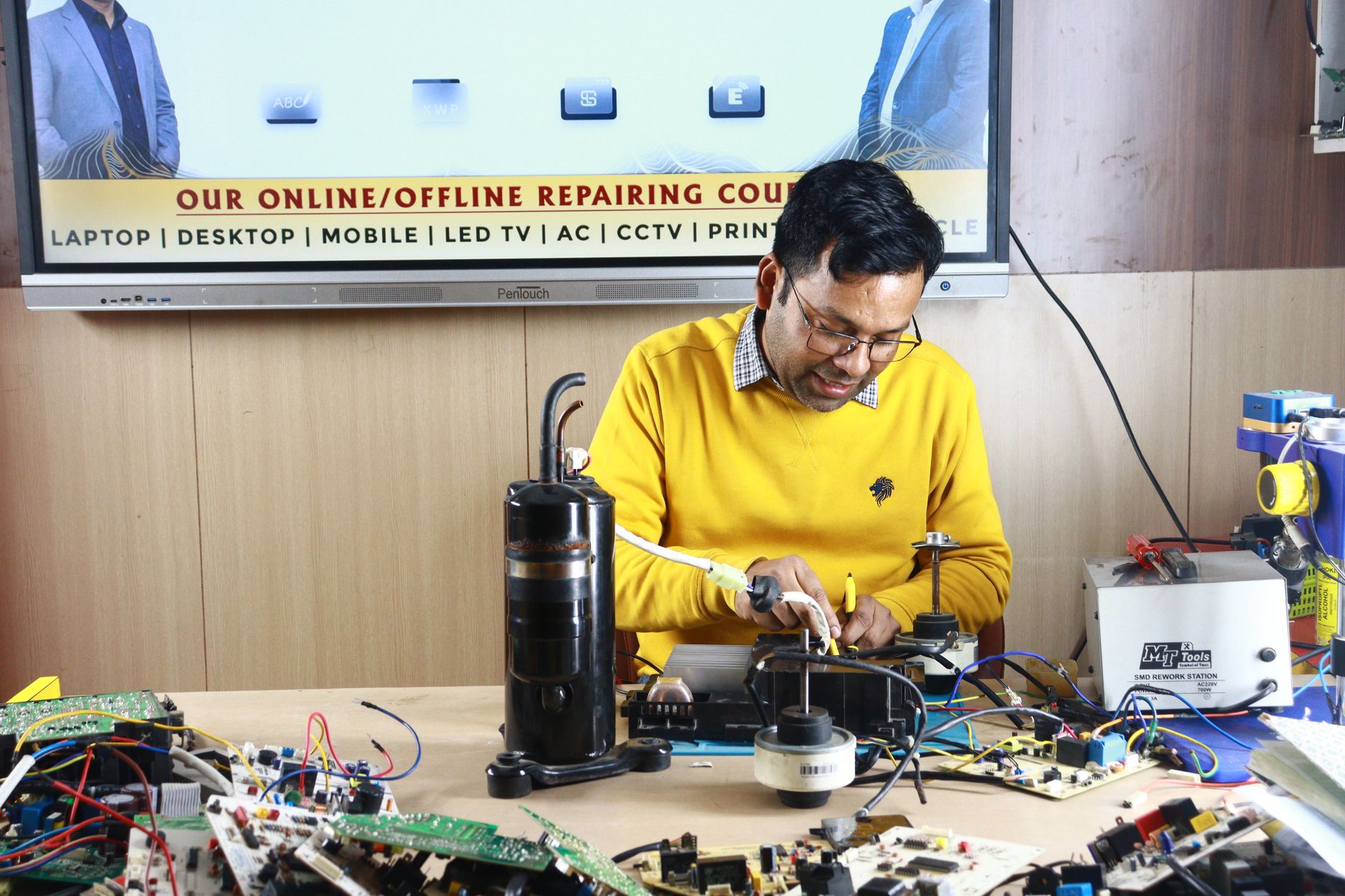
Training new TV repair technicians efficiently means balancing technical skill development with business profitability. This guide covers which repairs to prioritize first, how long each skill takes to master, and how to measure training success—while keeping margins intact. Learn how to structure a technician’s learning curve so they contribute to revenue sooner, not later.
Training Technicians on TV Repairs: A Shop Owner’s Guide
Smartphones and laptops dominate repair shop workflows, but TV repairs remain a high-margin niche—if your technicians are trained correctly. In 2026, the average U.S. repair shop sees 12–18% of service calls for TV-related issues, yet many technicians struggle to diagnose or repair them efficiently. Poor training leads to longer repair times, higher part costs, and frustrated customers. This guide breaks down how to train technicians on TV repairs without sacrificing profitability, which repairs to assign first, and how to track progress beyond just "can they fix it?"
Key Takeaways
- Start with simple repairs (e.g., backlight replacement, remote diagnostics) to build confidence before tackling complex logic boards.
- Complex repairs take 3–6 months to master—prioritize high-volume, lower-risk jobs first.
- Measure success by repair time, part accuracy, and customer feedback, not just completion rates.
- Use software to track technician progress—repair ticket management systems can log training milestones and identify skill gaps.
- Margin traps: Avoid letting new technicians handle high-dollar repairs (e.g., OLED panel swaps) until they’ve proven consistency.
How Long Does It Take to Train a TV Repair Technician?
The learning curve for TV repairs varies by complexity. Here’s a realistic breakdown of skill acquisition:
| Skill Level | Repairs They Can Handle | Time to Proficiency | Average Repair Time (Per Technician) |
|---|---|---|---|
| Beginner (0–3 months) | Remote diagnostics, basic menu resets, backlight replacement, loose cable repairs | 3–4 weeks | 60–90 minutes |
| Intermediate (3–6 months) | LCD panel replacement, power board diagnostics, basic firmware updates | 2–3 months | 45–75 minutes |
| Advanced (6–12 months) | OLED/LCD logic board repair, dead pixel mapping, advanced firmware recovery | 6–12 months | 30–60 minutes |
| Expert (12+ months) | Full panel replacement (OLED, QLED, Mini-LED), custom calibration, high-end audio/video repairs | 12+ months | 20–45 minutes |
Quick Answer:
Training a technician to handle basic TV repairs (like backlight or cable issues) takes 3–4 weeks, while advanced logic board or OLED repairs require 6–12 months. Focus first on high-volume, lower-risk jobs to build confidence and revenue contribution.
Which Repairs Should New Technicians Handle First?
Not all repairs are created equal. Assigning the wrong job too soon wastes time, parts, and customer goodwill. Follow this progression order to minimize losses:
1. Start with "No-Brainer" Repairs (0–4 Weeks)
These require minimal tools, low part costs, and quick turnaround:
- Remote diagnostics (e.g., HDMI input issues, source selection failures)
- Basic menu resets (using hidden codes or factory resets)
- Loose cable repairs (HDMI, power, or speaker cable reconnections)
- Backlight replacement (common in older LCD TVs, parts cost $30–$80)
Why? These build confidence without risking expensive parts or long repair times. A technician can complete 3–5 of these per day once trained.
2. Move to Mid-Level Repairs (4–12 Weeks)
Once they’re consistent with basics, introduce:
- LCD panel replacement (parts cost $150–$400, labor 1–2 hours)
- Power board diagnostics (testing capacitors, voltage regulators)
- Basic firmware updates (using manufacturer tools like Samsung Smart TV or LG WebOS)
Pro Tip: Use failed repair logs to identify common mistakes. For example, if a new tech keeps damaging power boards during diagnostics, add a step-by-step checklist for capacitor testing.
3. Advanced Repairs (3–6 Months In)
Only after a technician has 50+ successful mid-level repairs should they tackle:
- OLED panel swaps (parts cost $300–$1,200, requires precision soldering)
- Logic board repairs (BGA reballing, dead pixel mapping)
- Custom calibration (for high-end audio/video setups)
Margin Alert: OLED repairs have a 30–40% failure rate for new technicians due to delicate soldering. Charge 20–30% higher for these jobs until they’re reliable.
How to Measure Training Success (Beyond "Can They Fix It?")
Tracking progress isn’t just about whether a repair works—it’s about efficiency, accuracy, and profitability. Use these metrics:
1. Repair Time per Technician
- Goal: Reduce average repair time by 20% every 2 months.
- Benchmark: A trained tech should handle a backlight replacement in under 45 minutes; a logic board repair in under 90 minutes.
- Red Flag: If a tech takes longer than 2 hours on a mid-level repair, they’re not ready for advanced work.
2. Part Accuracy Rate
- Track: How often they misidentify or damage parts during repair.
- Example: If a tech replaces the wrong power board in 5% of cases, they need more hands-on practice.
- Solution: Use barcode-scanned inventory (like The Quick Repairs’ inventory management system) to log part usage and spot inconsistencies.
3. Customer Feedback Score
- Survey customers (via email or post-repair follow-up) on:
- Was the TV fully functional after repair?
- Did the technician explain the issue clearly?
- Would they return for future repairs?
- Target: 90%+ positive feedback before certifying a tech for complex jobs.
4. Profit Margin per Repair
- Calculate:
(Labor Cost + Part Cost) / Repair Revenueshould trend below 60% for high-margin jobs. - Example: A $500 OLED repair with $200 parts and $150 labor should net $150 profit—or 30% margin.
Software Tip: Use repair ticket management (like The Quick Repairs’ system) to log training milestones, part usage, and customer notes automatically.
Common Training Mistakes That Kill Margins
Even well-intentioned shops make these errors when training TV repair technicians:
1. Skipping the "Why" Behind Repairs
- Problem: Teaching a tech how to replace a backlight without explaining why it failed leads to repeat issues.
- Fix: Use diagnostic flowcharts (e.g., "If the TV has no power, test these 5 components first").
2. Letting Them Jump to High-Risk Repairs Too Soon
- Problem: A tech who’s only done 10 backlight replacements might attempt a $1,000 OLED panel swap—and fail.
- Fix: Set repair quotas (e.g., "Handle 20 LCD replacements before touching logic boards").
3. Ignoring Tool and Adhesive Training
- Problem: Using the wrong torx drivers or thermal paste can damage screens or boards.
- Fix: Dedicate one full day to tool calibration and adhesive application (e.g., 3M VHB tape for panel adhesion).
4. Not Tracking Failed Repairs
- Problem: If a tech keeps failing the same repair (e.g., Samsung TU8000 power board issues), the shop loses money.
- Fix: Log failed repair codes in your system and review them weekly.
5. Overlooking Software Diagnostics
- Problem: Many TV issues are firmware or HDMI handshake problems, not hardware.
- Fix: Train techs to use manufacturer tools (e.g., LG TV Plus, Sony Bravia Remote) before opening the unit.
Tools and Resources for TV Repair Training
Essential Tools for Technicians
| Tool | Purpose | Estimated Cost (2026) |
|---|---|---|
| Hot air rework station | Soldering BGA chips (logic boards) | $150–$400 |
| Multimeter (Fluke 87V) | Testing capacitors, voltage | $120–$200 |
| Torx driver set | Panel removal (avoid stripping) | $20–$50 |
| UV flashlight | Inspecting dead pixels | $15–$30 |
| Panel lift kit | Safe LCD/OLED removal | $50–$150 |
Recommended Training Resources
- YouTube Channels:
- TV Repair Lab (detailed diagnostics)
- TechSource TV (OLED/LCD repairs)
- Books:
- TV Repair Manual: 2026 Edition (Cengage) – Covers 2026 model diagnostics.
- Software:
- The Quick Repairs POS – Tracks technician progress, part usage, and repair logs.
Final Thought: Training Pays Off in Revenue
A well-trained TV repair technician can double your shop’s revenue per square foot by handling high-margin jobs efficiently. The key is structured progression—start with simple repairs, measure progress with data (not just gut feeling), and use software to track every step.
If managing technician training, repair logs, and inventory feels overwhelming, The Quick Repairs POS system can automate the process. From repair ticket management to inventory tracking, it ensures your techs are productive, profitable, and properly trained.
Talk to an expert to see how The Quick Repairs can streamline your shop’s training workflow today.
Reference Sources: