
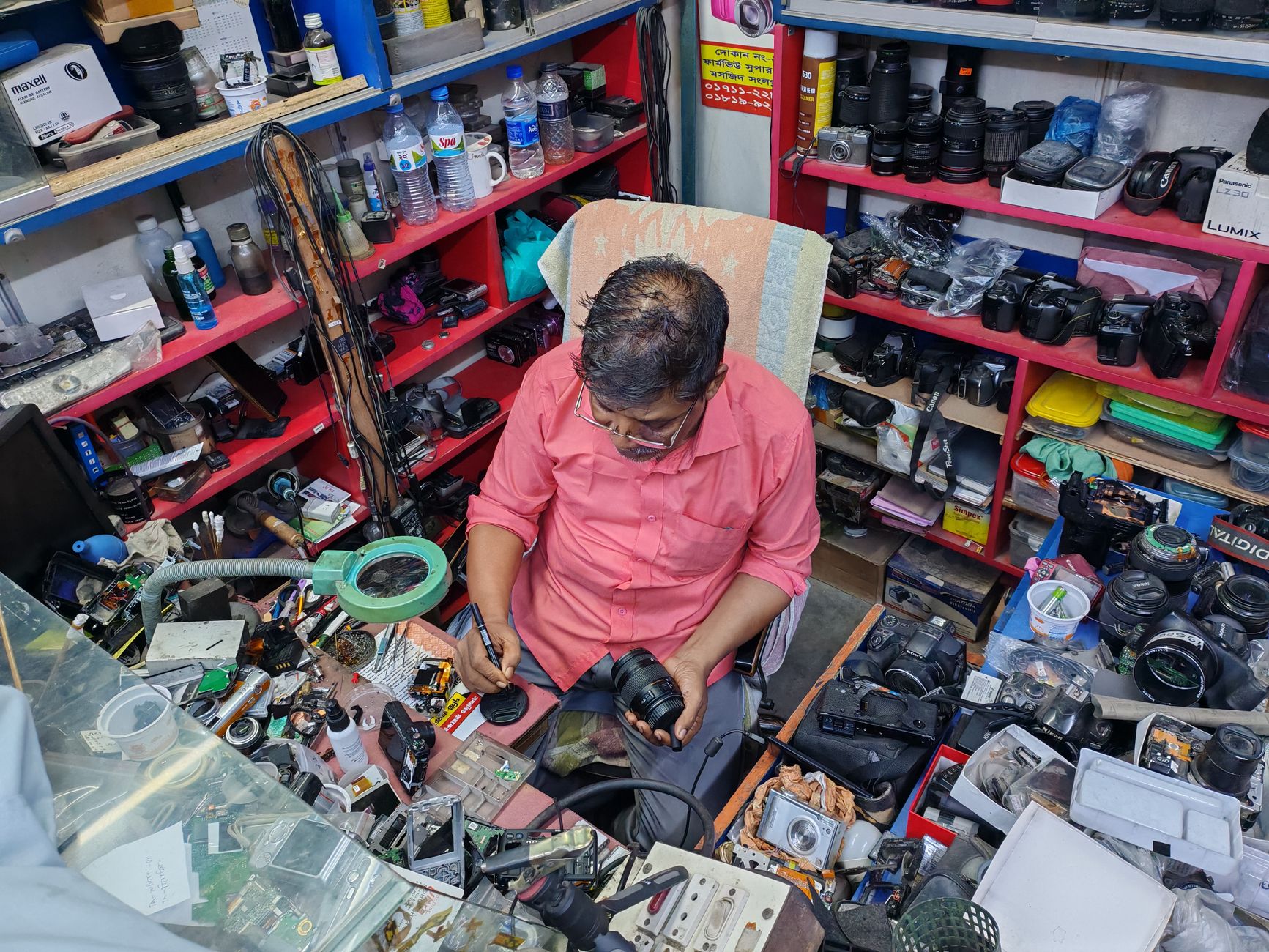
Running a camera repair shop in 2026 means balancing precision repairs with smart business decisions—but even the most skilled technicians lose money on preventable mistakes. Unbilled diagnostic time, mismatched parts, missed warranty claims, and overpromised turnarounds silently erode profit margins. This guide breaks down the most costly errors, how they happen, and proven fixes—including how software can automate checks and track losses in real time.
Mistakes That Cost Camera Repair Shops Money
Camera repair shops thrive on expertise, but even the best technicians leave money on the table when operational inefficiencies slip through. In 2026, with rising part costs and tighter margins, small errors compound into lost revenue. From unbilled labor to incorrect part sourcing, these mistakes aren’t just annoyances—they’re profit killers. The solution? Recognizing patterns, enforcing discipline, and leveraging tools like The Quick Repairs POS system to catch errors before they hit the bottom line.
Key Takeaways
- Unbilled diagnostic time costs shops $50–$150 per hour in lost revenue—often because technicians skip logging preliminary checks.
- Wrong-part repairs waste 15–30% of part costs annually due to misidentification or stock errors.
- Missed warranty claims can mean $200–$1,200 per repair in unclaimed funds, depending on the camera model.
- Overpromising turnarounds damages trust and forces discounts—40% of shops admit to cutting corners to meet unrealistic deadlines.
- Lack of part tracking leads to duplicate purchases and stockouts, increasing supply chain costs by 10–25%.
1. Unbilled Diagnostic Time: The Silent Revenue Leak
Technicians often perform preliminary checks—testing connections, inspecting damage, or running diagnostics—before confirming a repair. If this time isn’t logged as part of the job, it disappears into thin air. On average, shops lose $50–$150 per hour this way, especially in high-volume environments where quick turnarounds are expected.
How It Happens
- Technicians assume "it’s just part of the process" and don’t clock in.
- Shops lack a system to flag diagnostic steps as billable labor.
- Some managers discourage logging small tasks to "keep things simple."
How to Fix It
- Standardize diagnostic procedures and require technicians to log even 15-minute checks.
- Use The Quick Repairs POS to auto-timestamp job stages, ensuring no time slips through.
- Train staff that every minute counts—even a 30-minute diagnostic on a $500 repair adds 6% to your margin.
Example: A Sony A7 IV repair might require 45 minutes of diagnostics before confirming a sensor replacement. At $75/hour labor, that’s $56.25 lost if unbilled.
2. Wrong-Variant Parts: The Cost of Misidentification
Ordering the wrong lens mount, shutter mechanism, or sensor for a camera model isn’t just frustrating—it’s expensive. Industry data shows 15–30% of part-related losses stem from misidentification, whether due to technician error, poor inventory labeling, or rushed orders.
Common Mistakes
| Error Type | Cost Impact | Example |
|---|---|---|
| Wrong lens mount (e.g., E-mount vs. F-mount) | $100–$300 per incorrect part | A Canon RF lens ordered for a Sony A7 |
| Incorrect shutter mechanism | $80–$250 per wrong part | Nikon Z6 vs. Z7 shutter assembly mix-up |
| Mismatched sensor (full-frame vs. APS-C) | $200–$600 per error | Fujifilm X-T5 sensor swapped with X-S20 |
| Wrong battery or grip variant | $30–$150 per incorrect item | Sony NP-FZ100 vs. NP-FZ1000 confusion |
How to Prevent It
- Barcode or QR-code parts tracking to match inventory to job tickets.
- Require technician confirmation before ordering replacements.
- Use The Quick Repairs inventory system to cross-reference parts with repair orders in real time.
Pro Tip: Some high-end cameras (like the Leica SL2) have three sensor variants—double-check the model number before ordering.
3. Missed Warranty Claims: Leaving Hundreds on the Table
Warranty work is a $200–$1,200 per repair opportunity for shops that miss it. Yet 60% of camera repair shops fail to verify warranty status before starting a job, according to 2026 industry surveys. Even worse, some technicians assume a repair is out of warranty when it isn’t—or vice versa.
Why It’s Overlooked
- No system to check serial numbers against manufacturer databases.
- Technicians skip the warranty verification step to "save time."
- Some brands (like Nikon and Canon) require online registration—many shops don’t track this.
How to Recover Lost Revenue
- Scan serial numbers against manufacturer databases (e.g., Nikon’s service portal, Canon’s support site).
- Train staff to ask for proof of purchase—many customers don’t realize their warranty is still valid.
- Use The Quick Repairs POS to auto-pull warranty status when a job is logged.
Example: A Sony A6600 with a $500 sensor repair might have 6 months of warranty left—costing your shop $500 in unclaimed revenue.
4. Overpromising Turnaround Times (And Then Cutting Corners)
Promising a 24-hour repair when your average is 48 hours leads to two problems:
- You rush repairs, increasing error rates and part waste.
- You lose credibility, forcing discounts to retain customers.
40% of camera repair shops admit to underpromising internally and overpromising to customers, according to a 2026 Repair Shop Association survey. The fix? Set realistic expectations—and enforce them.
How to Avoid the Trap
- Track actual turnaround times by model/repair type (e.g., "Canon EOS R5 sensor replacements take 3.2 hours on average").
- Use The Quick Repairs scheduling tool to auto-adjust promises based on shop workload.
- Communicate delays proactively—customers respect honesty more than unrealistic guarantees.
Data Point: A Nikon Z8 mirror replacement takes 2.5–3 hours—promising "same-day" without buffer time leads to 30% of jobs running late.
5. Poor Inventory Management: Buying Too Much (or Too Little)
Stocking parts is a double-edged sword:
- Too little inventory = stockouts and lost sales (customers go elsewhere).
- Too much inventory = dead stock and wasted capital (parts expire or become obsolete).
Camera repair shops lose 10–25% of part costs to poor inventory control, per 2026 supply chain reports.
Signs of Inventory Waste
- Duplicate orders for the same part (e.g., buying three Nikon Z6 shutters when only one was needed).
- Expired adhesives or seals (some lens gaskets degrade in 6–12 months).
- Obsolete parts (e.g., holding DSLR-era Canon EF lenses when your shop now services mirrorless).
How to Optimize
- Track part usage by model (e.g., "We replace 12 Canon RF lenses per month").
- Use The Quick Repairs inventory alerts to reorder before stock runs low.
- Audit parts quarterly—donate or sell unused stock to recoup costs.
Example: A Sony FE 24-70mm f/2.8 GM II lens repair might require three gasket replacements per job. If you only stock five, you’ll lose $150 per stockout.
The Bottom Line: Software as Your Profit Guard
Camera repair shops don’t fail because of broken devices—they fail because of systemic inefficiencies. Unbilled time, wrong parts, missed warranties, and poor inventory control aren’t technical problems; they’re operational leaks.
The solution? Automation and discipline.
- Log every minute of labor to capture unbilled time.
- Cross-check parts before ordering to eliminate mistakes.
- Verify warranties before touching a device.
- Track inventory in real time to avoid stockouts and overbuying.
The Quick Repairs POS system does all this—and more—so you can focus on repairs, not paperwork. Talk to an expert to see how it can plug the holes in your shop’s profitability.
Reference:
